
Getting Cook County Court Records
No single database holds every Cook County court record. Sort the matter by court and record type first. Felony, civil, domestic, and calendar files run through the Superior Court of Georgia, Alapaha Judicial Circuit. The Cook County Clerk of Superior Court keeps those. Probate, Magistrate, Juvenile, and the municipal courts each hold their own files. The state's Georgia Courts E-Access directory routes users to a provider account. The Clerk's eFile page splits civil PeachCourt from criminal EZ-File. Neither vendor is a complete public docket for every Cook court.
Need a Superior civil or domestic file? Use E-Access to reach Cook's provider, then register at PeachCourt if the record is covered. EZ-File's Georgia page is an authenticated criminal e-filing and account path. It is not a guest case search. The practical public alternatives are the Clerk's counter, phone, fax, mail, and courthouse inspection. Georgia e-filing standards require a free courthouse alternative or public terminal. Cook does not publish the terminal's room or assistance policy.
Visit the records office at 212 N. Hutchinson Ave., Adel, GA 31620. Or call (229) 896-7717. You can also fax (229) 896-7589. Hours run Monday through Friday, 8:00 a.m. to 5:00 p.m., excluding holidays. The contact block lists no email and no drop box. Turnaround is not guaranteed. The Clerk's Copies page covers eCert and copy routes. Check it and call before mailing payment.
- Identify the court, case type, and record custodian before requesting a file.
- Gather the case number if known, party or case style, document name, and date range.
- Choose E-Access or eCert when available, or use the counter, phone, fax, mail, or courthouse terminal.
- State whether the request is for inspection, a standard copy, or a certified copy, and ask about redaction.
- Confirm the fee, delivery path, and any access limit with the responsible Clerk before relying on a result.
Cook County Open Records Form Fields
The Cook County Open Records Request form comes from the Board of Commissioners. It is not from Superior Court. It can create a clear written trail for a county record. A court-file request should still go to the responsible court Clerk first. Georgia court rules and confidentiality laws add limits beyond the Open Records Act.
Filling it out means choosing "inspect and copy" or "obtain copies." Next comes describing the records. You then select a response within three business days if available or a requested date. The form also collects a phone number, signature and date, printed name, mailing address, fax, completion date, page count, fee charged, payment date, and a cash, check, or money-order choice. Its general copy language makes the first 15 minutes of staff time free. It generally describes $0.10 per page. For Superior court copies, the Cook Clerk's court-copy schedule controls.
For the wider public-record framework, the Georgia Attorney General open-government FAQ explains how open-government rules work alongside Cook County's court-file rules.
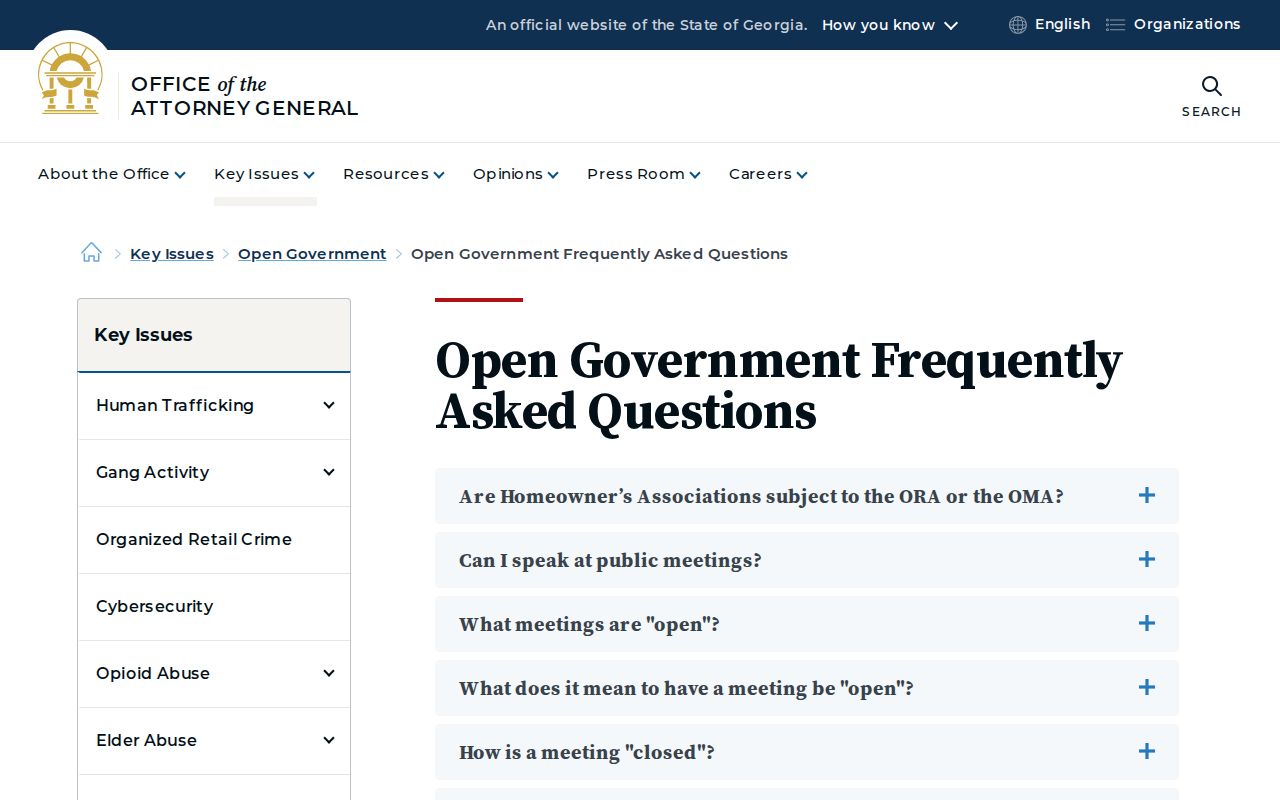
State access rules frame the local form. A written request still cannot open a sealed, juvenile, or otherwise protected court file.
Court Record Types
In Cook County, "court records" is a routing term. The right office depends on the court, the case type, and whether the item is a docket entry, filed document, recording, transcript, or traffic record. Knowing which one you need saves a trip to the wrong desk.
- Superior Court: civil, domestic, criminal, arraignment, calendar, warrant, garnishment, and related filings.
- Probate Court: wills, estates, guardianships, vital records, marriages, firearms permits, and county traffic.
- Magistrate Court: claims up to $15,000, dispossessory cases, garnishments, writs, warrants, bonds, and county ordinances.
- Municipal courts: Adel, Sparks, Lenox, and Cecil city traffic and ordinance records.
- Federal records: Cook matters in the Middle District of Georgia, Valdosta Division, use PACER or CM/ECF.
- Recording files: property, liens, UCC filings, plats, and military-discharge records use separate routes.
Specialty paths take the same care. Juvenile Court uses protected access, and JDEX is an authorized-user system. Accountability Court, civil ADR, and the IBIC parenting program may carry referral or calendar fields. A program roster is not a general public docket. Nor is a mediator record. Protective-order files can hold protected identifiers. For federal records, use the PACER case-search path, not the Cook Clerk.
Cook County Probate Vault Back to 1875
Probate runs on its own Cook County records path. Wills, estates, guardianships, and related records reach back to 1875. Most can be inspected in the vault during office hours. The same office also custodies county traffic and vital records. A probate file request should not default to the Superior Clerk.
One quirk to know: a will filed for safekeeping stays sealed in its envelope. It is not public under the stated Probate procedure. Vital-record copies follow a separate schedule. The cost is $25 for the first certified birth or death copy and $10 for each additional copy. County traffic uses the Probate payment route, which has its own contact and mail process.
Inside a Cook County Court Record
A docket is an index or timeline. A filed record is the petition, indictment, motion, response, exhibit, order, judgment, transcript, or other item placed in the case file. A certified copy is one issued or certified by the Clerk or the eCertification system. A vendor screen or downloaded image can help with review. But it is not automatically a certified courthouse copy.
| Court and county | Names the custodian, such as Cook Superior, Probate, Magistrate, a municipal court, or a federal court. |
|---|---|
| Case number | Uses the court’s assigned identifier. Cook civil calendars show year plus CV or CVD family markers; a public criminal format was not located. |
| Case style | Caption or relationship of the parties, or the government-versus-accused format in a criminal matter. |
| Filing and event dates | Dates for filings, hearings, orders, continuances, resets, and dispositions when the record displays them. |
| Filed documents | Petitions, indictments, motions, responses, exhibits, signed orders, judgments, and other filed items. |
| Setting details | Calendar date, time, setting category, judge, reporter planning, witness field, or allotted time where shown. |
| Disposition | Outcome or status field. Civil disposition forms distinguish jury, bench or non-jury, and non-trial or ADR dispositions. |
| Access marker | Document link, seal, restriction, redaction, or other indicator that affects what can be copied. |
One calendar entry never tells the whole case story. A "filed" event also does not promise that its image is free or available. If the case number is hard to place, a Cook County Case Lookup can identify the court before you request a record. The Clerk's file remains the authority.
Cook County Property Images vs Case Dockets
The Cook Superior Clerk wears two hats. The split trips people up. One side handles court filings, the civil docket, and criminal docket entries. The other side records property documents, liens, UCC filings, and plats. Those recording images may come through GSCCCA, the county Tax Assessor's qPublic system, or the Clerk's recording office. Useful as they are, they will never answer a docket search. So is the Clerk's recording office not a substitute. They cannot replace a filed court order either.
| Record path | What it shows | Where to start |
|---|---|---|
| Cook court case file | Docket events, pleadings, orders, judgments, and case settings. | Responsible court Clerk or provider account. |
| Property or recording image | Deeds, liens, UCC filings, plats, or related recording material. | qPublic, GSCCCA, or Clerk recording desk. |
| City citation file | Municipal traffic or ordinance activity held by the issuing city. | Adel, Sparks, Lenox, or Cecil court clerk. |
Sort out what the item is before you search. A deed image is not a case lookup, and mistaking one for the other wastes a trip. It also explains why a single Cook County request can touch more than one office.
PeachCourt Images vs the Official Cook File
PeachCourt handles Cook's civil e-filing and document access for covered Superior matters. Searching it takes an account. Registration is free for attorneys and non-attorneys alike. Pulling a document image, though, can cost you. Help material lists a $0.50-per-page document charge plus a convenience fee, and sealed files, adoptions, and proposed orders not yet executed by a judge are excluded.
For the public record, the Cook Clerk still governs. If PeachCourt shows a case number, a filing event, or an image, check it against the Clerk before you pay for a certified copy. A blank result can mean several things: the wrong court, a coverage limit, an excluded document, or a restriction. It never proves that no Cook County case exists.
Fees and Certified Copies
The Cook Clerk's published schedule draws a line between in-office copies and online eCert copies. Certification is an act the Clerk or eCertification performs. It is not a label that rides along with every vendor image. The schedule posts amounts and caveats side by side. The Clerk posts no general search fee, ID rule, or guaranteed turnaround.
| Item | Amount |
|---|---|
| In-office standard copy, O.C.G.A. §15-6-77(g)(2) | $0.50 per page |
| In-office certified copy, O.C.G.A. §15-6-77(g)(4) | $2.50 first page + $0.50 each additional page |
| In-office non-standard copy | $1.00 per page |
| Online certified copy | $2.50 first page + $0.50 each additional page, plus card-processing fee |
| Online standard copy | $2.50 first page + $1.00 each additional page, plus card-processing fee |
| Search, turnaround, or ID | Fee not located; ID not specified |
Cook County Clerk of Superior Court
212 N. Hutchinson Ave.
Adel, GA 31620
(229) 896-7717
Online standard and certified copies both run through the eCert route. It is linked from the Clerk's copy page. PeachCourt's charge is just a convenience-access cost. The Clerk's own in-office and eCert schedule still controls Cook court copies. Before you pay, ask which product the receiving office will accept.
Cook County Standard, Certified, and Non-Standard Copies
Three copy types appear in the Cook Clerk's listings. A standard copy is the ordinary page copy. A certified copy carries the Clerk's certification, priced at the first-page and additional-page amounts in the published schedule. A non-standard copy covers an unscanned, odd-size, or staff-assisted atypical record, billed at the listed per-page rate.
Match the copy type to the job. Reading a filing? A standard copy works. An office demanding proof of court issuance will want certification. Ask whether the record comes through eCert, at the counter, or only from another office. Remember that the online card fee and any document-image charge sit on top of the face amounts in the fee table.
Cook County Transcript Requests Are Different
No docket search produces a transcript. A court reporter prepares and keeps that record. Cook civil calendar entries use the Rprted field to flag reporter planning, but the flag does not promise a transcript exists today. For the next request, the Alapaha Judicial Circuit directory lists the court and reporter contacts.
Cook posts no current reporter pricing or turnaround. Treat no old statewide rate as a Cook quote. When you call, give the reporter or circuit office the court, the case number, the hearing date, and the proceeding you need, then ask about availability, format, fee, and delivery. One more caution: a certified docket copy can never replace a transcript of spoken testimony.
Cook County Digital Recording Rule 36.19
Uniform Superior Court Rule 36.19 took effect February 26, 2026. It governs digital recording in authorized Superior Court proceedings. The rule may change how you word an audio or recording request. It does not turn a recording into a public docket search. It also promises no file for every hearing. Ask the responsible court about the procedure and fee for a digital recording. Keep four products straight. These are a public terminal display, a PeachCourt image, a Clerk-certified copy, and a reporter transcript. Georgia's e-filing standards and Cook's early PeachCourt adoption back electronic access. Digitization has not made every historical document searchable from home.
Redaction Before Copying Cook County Court Records
An open file is not a license to copy every field. Uniform Superior Court Rule 21.6 protects identifiers and certain family-violence or stalking-order information. O.C.G.A. §9-11-7.1 covers the same ground. Social Security numbers, financial data, medical details, protected addresses, and juvenile information require redaction or a protected page when the law applies. Ask the office holding the file for the non-exempt portion. Ask also for the legal reason behind anything withheld.
Restriction is a different question. The Alapaha Judicial Circuit record-restriction route shows that eligibility may rest on dismissal, nolle prosequi, a not-guilty finding, or successful First Offender completion. Arrests on or after July 1, 2013 route to the District Attorney's Office. Earlier arrests begin with the arresting agency. That official page frames the issue as one of access, not deletion.
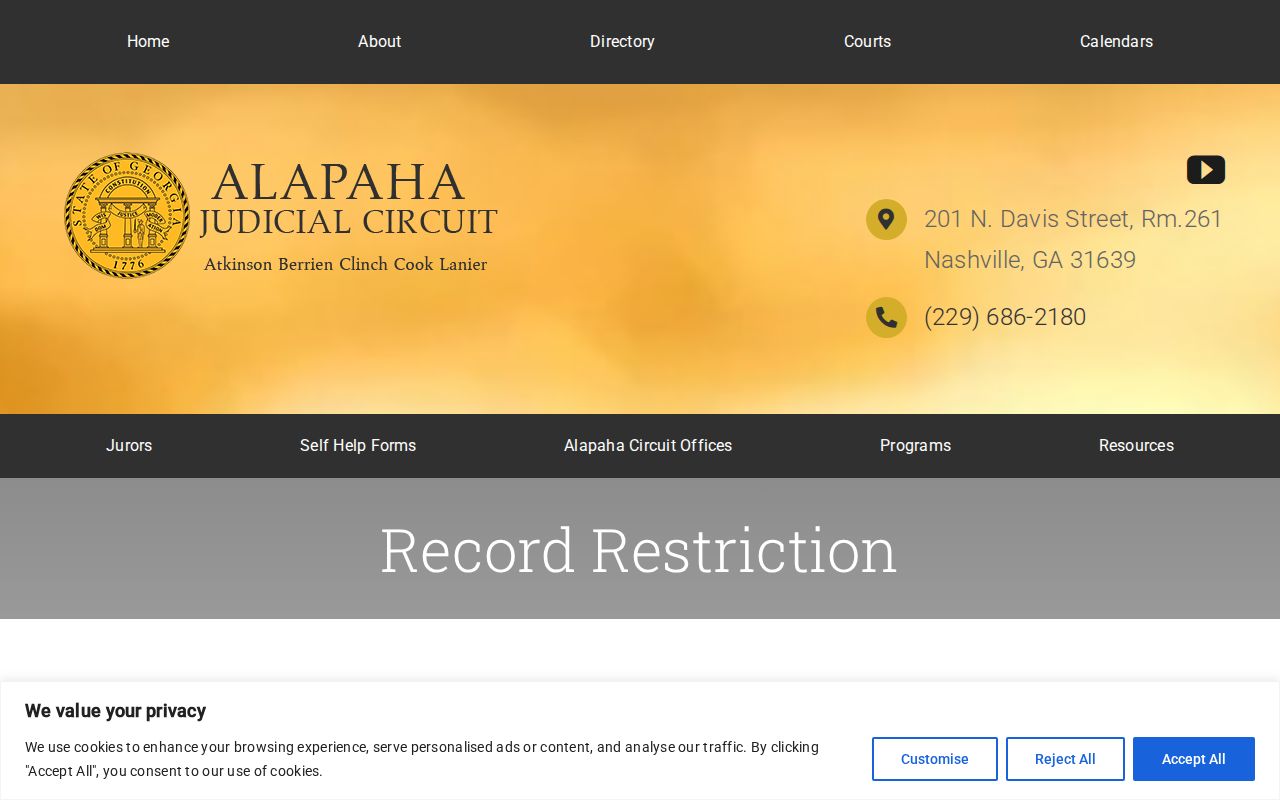
Restriction does not mean destruction. The record survives for courts and law enforcement under the applicable process. Only public copies get limited or redacted.
Sealed Records and Public Access
Georgia's Open Records Act leans toward access. It still leaves court-file rules intact. Start with the Cook office holding the record and request the non-exempt part. Uniform Superior Court Rule 21 adds its own court-access framework: any limitation should name the protected portion, its nature, its duration, and the reason. A private request cannot leap over a sealing order.
Key access rules:
O.C.G.A. §50-18-70(a) states Georgia’s public policy favoring open government unless a lawful exception applies.
O.C.G.A. §50-18-71 covers inspection, copying, fees, and the three-business-day response framework or a stated timetable.
O.C.G.A. §50-18-72 lists exemptions and supports redaction when an open record contains protected material.
Uniform Superior Court Rule 21 and Rules 21.1 through 21.6 govern public access, sealing procedure, and protected identifiers in Superior Court records.
O.C.G.A. §§15-11-58 and 15-11-59 require special juvenile access treatment. Cook’s Clerk says juvenile records are not generally public, and JDEX is an authorized system rather than a public name search.
Adoption files and military-discharge records sit outside the Cook Clerk's general public access too, and PeachCourt keeps sealed and adoption papers out of ordinary view. Juvenile matters follow the same logic. Call the circuit at (229) 482-2484 with a juvenile question. If a Cook County court docket entry seems missing, the right move is a search by case type plus a call to the clerk. Guessing that the record never existed is the one answer you should skip.